Wandrers Nachtlied II («Über allen Gipfeln») (Franz Schubert) — practice with piano accompaniment
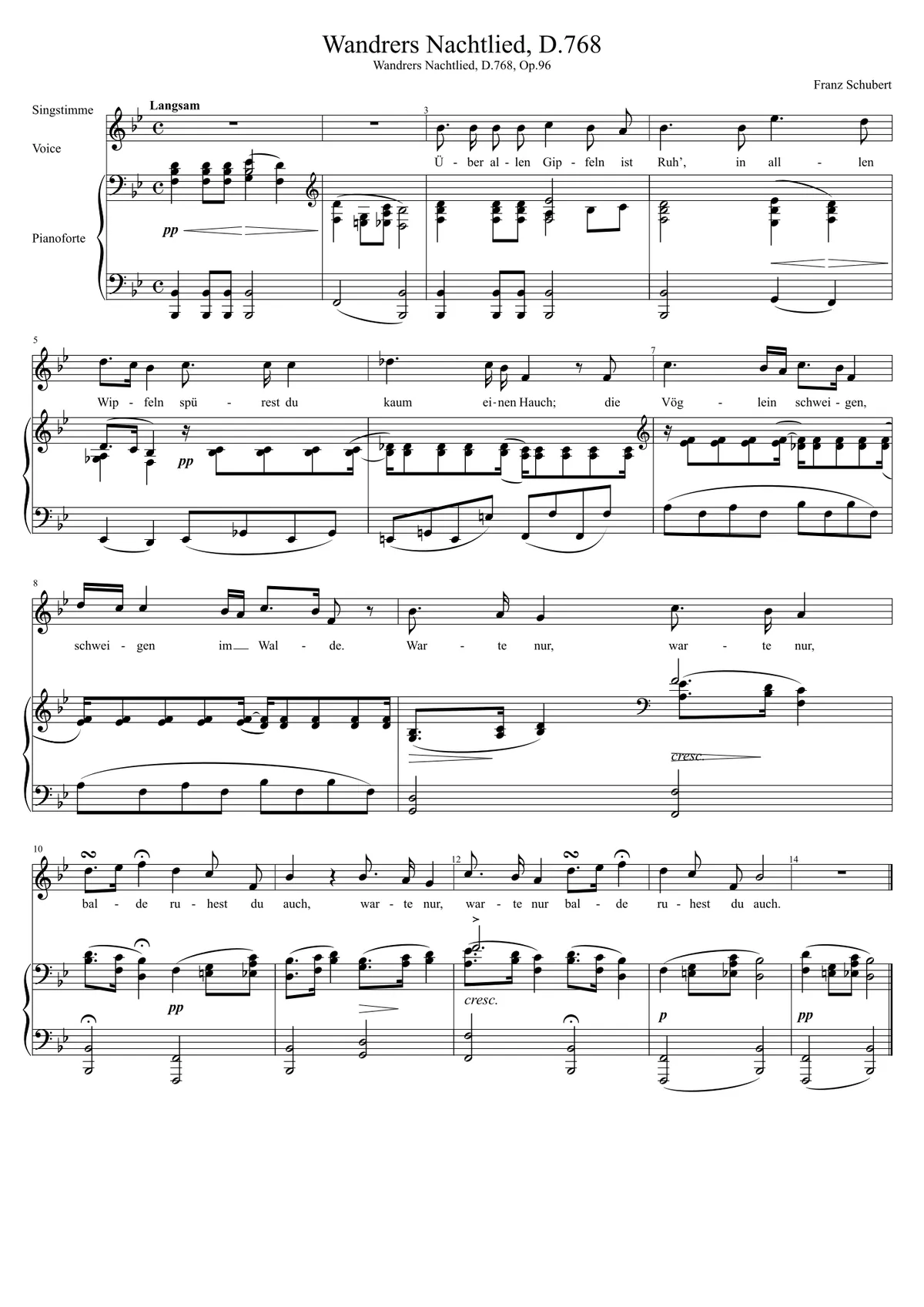
Schubert's Wandrers Nachtlied D.768, Über allen Gipfeln ist Ruh, a 14-bar Goethe song in B♭ major. Notes for piano accompaniment practice.
About the song
Schubert's Wandrers Nachtlied, D.768, sets the second of Goethe's two poems with that title, the eight short lines beginning "Über allen Gipfeln ist Ruh": over all the mountaintops is peace. In the treetops you can hardly feel a breath of wind, the little birds fall silent in the forest, and the poem ends with a quiet promise to the wanderer: just wait, soon you too will rest. The text has drawn many composers, but Schubert's version is among the best known. It was published as the third song of his Op. 96.
The setting is only 14 measures long, slow and close to a whisper. This edition is in B♭ major in 4/4, with the voice between F4 and F5. Schubert repeats the final line, so the promise of rest is heard twice. Its economy makes it a favorite opener for a Schubert group and a revealing study piece.
What to practice
With so few measures, nothing can hide. Work on a steady, unhurried tempo and long, quiet notes that stay alive, especially on Ruh. The voice should match the stillness of the piano chords rather than lead with large dynamic swells.
Diction is central: ü in Über, Gipfeln and spürest must be rounded and forward, and the final consonants of Ruh', Hauch and auch need to be clear but soft. Plan how the repeated last line differs from the first statement, perhaps quieter and more resigned. Practice the ending with your pianist so the final chord and the silence after it are part of the performance.
Who it suits
This edition fits a high or medium voice and suits singers from high school through graduate level; it is often used to show tone and stillness in a short audition slot.
Practicing it in Opusis
- Play the piano part on its own and sing over it: choose the voice part and switch to accompaniment practice, and the vocal line drops out.
- Move the song up or down by as much as an octave. The score is redrawn in the new key and the playback follows it.
- Set your own tempo and loop any passage until it sits.
Questions
- What does Über allen Gipfeln ist Ruh mean?
- It means Over all the peaks there is peace. It is the first line of Goethe's second Wandrers Nachtlied, a short poem about evening calm and the rest that awaits everyone.
- What opus number was Wandrers Nachtlied D.768 published under?
- It appeared as No. 3 of Schubert's Op. 96, alongside Die Sterne, Jägers Liebeslied and Fischerweise. The D number comes from Otto Erich Deutsch's catalog of Schubert's works.
- Is D.768 the same as Der du von dem Himmel bist?
- No. Der du von dem Himmel bist is Goethe's first Wandrers Nachtlied, which Schubert set as D.224. D.768 sets the second poem, Über allen Gipfeln ist Ruh.
More songs
- Ständchen («Leise flehen»)Franz Schubert
- Die ForelleFranz Schubert
- Du bist die RuhFranz Schubert
- Gretchen am SpinnradeFranz Schubert
- Lachen und WeinenFranz Schubert
- Der LindenbaumFranz Schubert