Mandoline (Gabriel Fauré) — practice with piano accompaniment
Fauré’s Mandoline, Op.58 No.1: Verlaine text, G major, voice D4–E5. Diction, rhythm and ensemble tips for piano accompaniment practice.
About the song
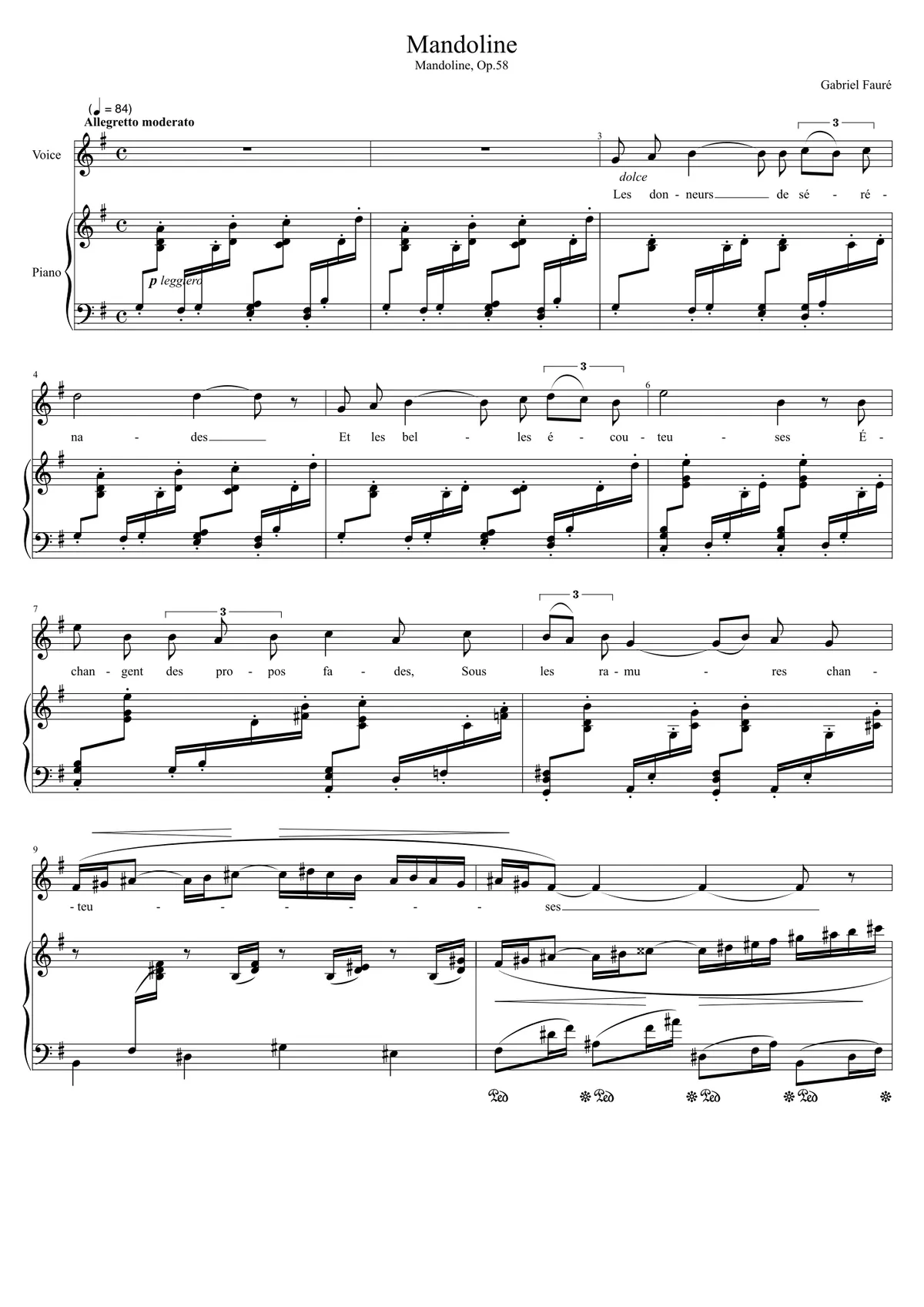
Mandoline opens Fauré’s Cinq mélodies “de Venise,” Op. 58, five Verlaine settings published by Hamelle in 1891. The poem comes from Verlaine’s Fêtes galantes, a book of verse that conjures the costumed lovers of Watteau’s paintings. “Les donneurs de sérénades et les belles écouteuses” — the serenaders and their lovely listeners — trade empty pleasantries under singing branches; the stock characters Tircis, Aminte, Clitandre and Damis drift past in silk jackets and long trailing gowns, and the mandolin chatters on beneath a rose-and-gray moon.
Fauré answers with a light, strumming piano part in G major that imitates the plucked instrument, and a vocal line that stays within a narrow compass. The charm lies in understatement: elegant, faintly ironic, never sentimental. It makes a natural opener for a French group and pairs well with Debussy’s setting of the same poem.
What to practice
With a range of just D4 to E5, the challenge is rhythm and diction rather than reach. The piano’s plucked figure must stay crisp and slightly detached, and the voice should float above it without leaning on downbeats. The French moves on quick, even note values, so speak it in rhythm first: watch the schwas in sérénades and écouteuses, keep the nasal vowels in chanteuses and Clitandre bright and forward, and make the liaisons the verse expects. Avoid swelling dynamics; let color come from vowels and text instead of volume, and let the moonlit last stanza soften without slowing the strumming pulse.
Who it suits
Its compact range suits sopranos, mezzo-sopranos and tenors in this key, and it is a favorite first Fauré song for undergraduates beginning French repertoire.
Practicing it in Opusis
- Play the piano part on its own and sing over it: choose the voice part and switch to accompaniment practice, and the vocal line drops out.
- Move the song up or down by as much as an octave. The score is redrawn in the new key and the playback follows it.
- Set your own tempo and loop any passage until it sits.
Questions
- What set is Fauré’s Mandoline from?
- It is the first of the Cinq mélodies “de Venise,” Op. 58, all to poems by Verlaine: Mandoline, En sourdine, Green, À Clymène and C’est l’extase.
- Who are Tircis, Aminte, Clitandre and Damis?
- They are stock names from pastoral poetry and the French stage, the kind of figures who populate the fêtes galantes paintings Verlaine admired. They are types rather than real people, which is part of the poem’s gentle irony.