Cäcilie (Richard Strauss) — practice with piano accompaniment
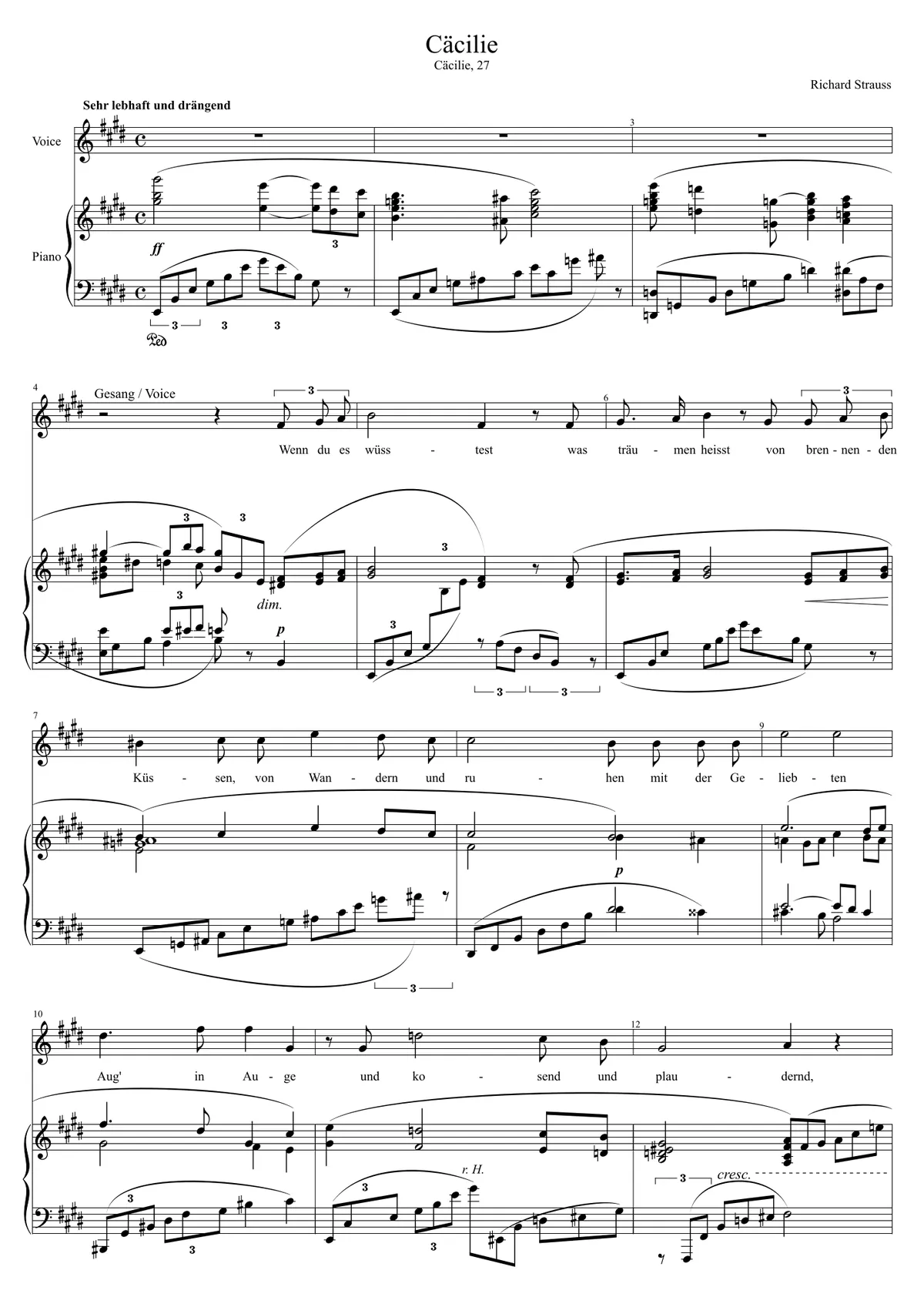
Richard Strauss's Cäcilie, Op. 27 No. 2, a surging E major love song to Heinrich Hart. Stamina and balance tips for piano accompaniment practice.
About the song
Cäcilie is the second of Richard Strauss's Four Songs, Op. 27, which he gave to his bride, the soprano Pauline de Ahna, at their wedding in 1894. The set also includes Ruhe, meine Seele!, Heimliche Aufforderung and Morgen! Heinrich Hart's poem is an urgent, rising declaration. It begins "Wenn du es wüsstest, was träumen heißt von brennenden Küssen": if you knew what it is to dream of burning kisses. Each stanza lists what the beloved does not yet know, and each ends with the same conclusion: if you knew, you would live with me.
Strauss matches the poem with a surging piano part and a vocal line that keeps climbing. This edition is in E major in 4/4, spanning E4 to B5 over 56 measures. It is a thrilling closer for a recital set and a favorite with singers who have the voice to ride its waves of sound.
What to practice
Stamina and pacing are everything. Each stanza builds toward its ending, so plan where to save and where to spend, and avoid peaking too early. Practice the high passages in context so the B5 arrives on a well-prepared breath rather than a lunge.
The accompaniment is thick and fast, so text and balance matter: sing on the vowel, keep consonants crisp in phrases such as brennenden Küssen, and trust the pianist to shape the dynamics around you. Rehearse the tempo changes together, since the song moves forward relentlessly and the ensemble has to breathe in the same places.
Who it suits
This edition suits a soprano or tenor with a full lyric or spinto sound and a free top, and it is best for advanced undergraduates, graduate students and professional recitalists.
Practicing it in Opusis
- Play the piano part on its own and sing over it: choose the voice part and switch to accompaniment practice, and the vocal line drops out.
- Move the song up or down by as much as an octave. The score is redrawn in the new key and the playback follows it.
- Set your own tempo and loop any passage until it sits.
Questions
- What is Cäcilie by Strauss about?
- It is an ardent love poem by Heinrich Hart. The speaker tells the beloved that if they only knew what love can be, they would come and live with him.
- Is Cäcilie too difficult for a beginner?
- Generally yes. The top reaches B5 in this edition and the dense piano part demands a large, well-supported voice, so it is usually assigned to advanced singers.
- What other songs are in Strauss Op. 27?
- Op. 27 also contains Ruhe, meine Seele!, Heimliche Aufforderung and Morgen!, all composed as a wedding gift to Pauline de Ahna in 1894.